Technical support from 08:00 - 17:00 mon-fri
Free delivery on all orders exceeding £100
Next day delivery with selected 'priority shipping'


Technical support from 08:00 - 17:00 mon-fri
Free delivery on all orders exceeding £100
Next day delivery with selected 'priority shipping'

During this blog post, we’re going to be weighing up and looking into the various benefits provided by utilising wireless (and briefly wired), microphone solutions for lecterns, pulpits, and podiums. Of course, these three platforms have distinct uses, but are most commonly used interchangeably in settings to describe an elevated or raised stand in which speeches are delivered. Wireless systems in particular thrive in said settings, offering hands and clutter-free audio for public speaking events; or even speaking engagements for that matter. Some of the most recognisable applications include lectures, sermons, conferences, and presentations.
An obvious advantage for wireless over wired solutions is enhanced mobility, audio clarity, and the ability to effectively eliminate any restrictive cabling. This enables seamless communication across various locations, be it conference halls or outdoor stages.
In reference to churches, pulpits were historically the primary speaking platform. Now, the more contemporary congregations have adopted the style of lecterns. Lecterns are generally preferred based on their versatility and compact size, which allows for greater flexibility in service formats. However, churches are challenging places to cable due to their construction. This brings us to our next point; Houses of Worship. We’re no strangers to enquiries requesting wireless equipment, but the lack of solutions for lecterns, pulpits, and podiums in houses of worship can result in the inevitable dreaded microphone cable run needing to be installed.
This is fine when the microphone is in a fixed location, but what about those scenarios where you come across a portable lectern or reading table? It can certainly become a nuisance if you’re attempting to fit a cable and are restricted due to physical limitations, or a lack of permission from heritage committees.
Worry not as there are plenty of solutions, which we’ll expand upon below.
Selecting the ‘correct’, so to speak, Wireless Microphone solution for a lectern, pulpit, or podium can quickly become a bit of a head-scratcher, but we’re here to help. Nowadays, there are an abundance of options available for use in churches, houses of worship, and conference halls, but this hasn’t always been the case due to the precise requirements needed in order for a wireless solution to perform as intended; particularly in religious settings. Fortunately, the benefits far outweigh the negatives.
Wireless mics eliminate the need for cabling, offering increased freedom of movement, in addition to a cleaner setup. Some of the most notable types are:
An example, or application, of this could be a pastor wearing a lapel mic to move freely while preaching, or a lecturer using a headset mic to walk away from the podium momentarily whilst presenting slides.
2. Wireless Transmitters / Receivers
Wireless transmitters and receivers are another superb addition that can immediately enhance your wireless setup:
An example, or application, of this could be a keynote speaker wearing a lapel mic with a bodypack transmitter on stage, which is then transmitted into a signal for the receiver, connected to a sound system.
3. Flexible & Versatile Setup
The flexibility of wireless solutions provide immense benefits, and allow for:
4. Portability For Installations
Portability is highly sought-after in wireless installations for events that change locations often. It’s a key selling point for venues that need a simple ‘plug-and-play’ option:
5. Integration With Sound Systems
Wireless systems are more often than not connected to sound systems, and possess increased capabilities:
While there are certain considerations to bear in mind, such as battery life, frequency management, and security, the growth in wireless microphone solutions for lecterns, pulpits, and podiums is vast. To summarise, they are an essential tool capable of offering freedom of movement, high-quality audio, improved flexibility, and the option for portability, if need be.
These are the focal points of a wireless system that can instantly transform the quality of your speeches or sermons when positioned on a lectern, pulpit, or podium.

The key to improving audio management depends on how effectively it’s managed, albeit via a wireless microphone system or wired microphone system. For speech applications, like in churches, conferences, classrooms, or stage presentations, enhanced audio is essential. There are numerous strategies that we’ll briefly discuss below, in order to maximise your system.
Key Strategies for Managing Wireless Mic Systems
First and foremost, we must choose the right type of wireless microphone. There are a handful to choose from, of which three we will be focusing on.
The first is Lavalier/Lapel, which is best used for preachers and offers hands-free, discreet, speech clarity. The second are headsets, suited for teachers, performers, active speakers, and such. These types of wireless headset microphones provide consistent audio levels, in addition to firmly remaining in place. Last but not least, handheld, preferred by guest speakers and group sharing to provide ease of use and control, since they’re able to be passed around from person to person with minimal effort.
Additional approaches for maintaining a functioning wireless solution, namely microphone system, consist of selecting clear legal frequencies to avoid interference with local TV stations or other wireless devices.
You can also assign dedicated channels to each mic, allowing you to keep track of channels in an organised manner, and prevent cross-talk between them. Labelling microphones is also another handy trick to keep track of who’s using what.
Something that can easily become overlooked is line-of-sight, and it’s a crucial aspect of any wireless solution to fully maximise. Positioning wireless receivers in view of the transmitter ensures proper placement and signal.
Another point to take note of is Battery Life. Most of us have left a device running without checking the batteries, assuming it will never deplete. Once it inescapably does, we’re scrambling to find a pack in a nearby drawer. Proactively monitoring the battery life of transmitters (mics) are a must if you want your wireless system to function at the highest level.
A final strategy we’re going to succinctly cover is user training. This is generally taught on site by an installer, who guides you through the process of correctly using the equipment. They may even leave instruction manuals, or data sheets to refer back to if you find yourself in a jam. However, it’s vital for speakers to know the do’s and dont’s in order to get the most of out your system, which may include how to eliminate any obstacles that present themselves, e.g. blocking the microphone capsule with your hands or clothing.
Introducing the age-old debate; traditional Wired Systems vs. modern-day Wireless Systems. Which is better? Well, before we delve into that, we must first assess the application and setting they’re going to be used in. Each system serves a distinct purpose, with wired and wireless both providing advantages and drawbacks depending on how, and where they’re installed.
Since we’re discussing the use of wireless solutions for lecterns, pulpits, and podiums, it’s a good idea to take a look at what Wired Microphone systems can offer in proportion to wireless microphone systems. There are numerous factors to consider before selecting a microphone system that’s right for you…
Wired Microphone Systems (Advantages)
Wired Microphone Systems (Disadvantages)
Wireless Microphone Systems (Advantages)
Wireless Microphone Systems (Disadvantages)
Why are traditional wired systems preferred?
Why are modern-day wireless systems preferred?
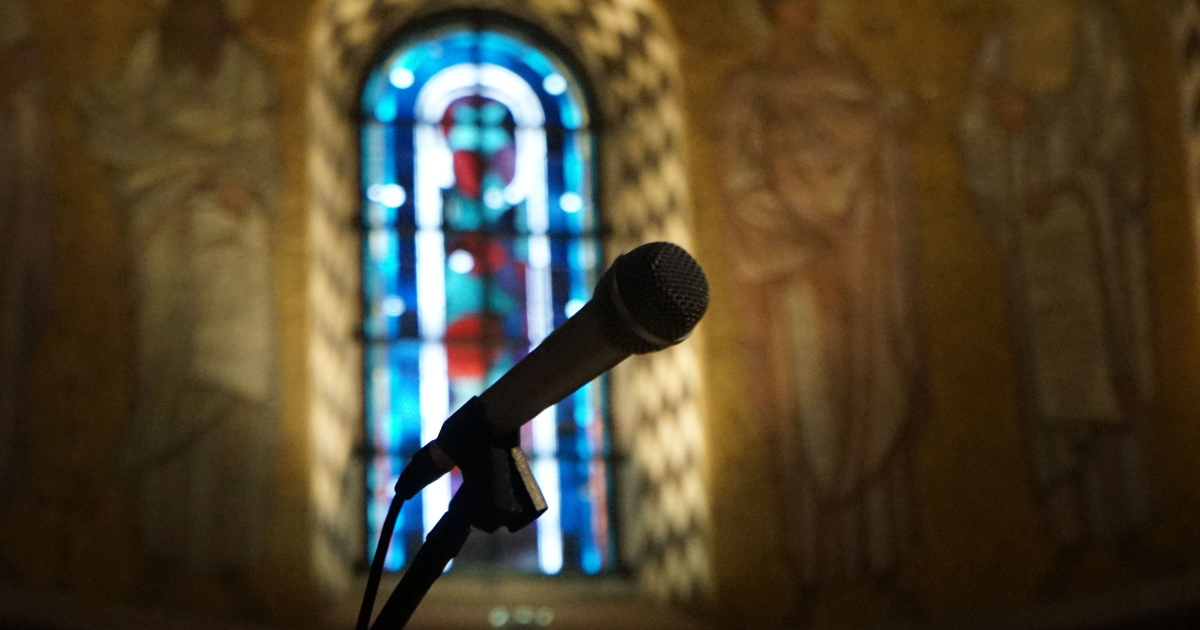
One of the primary benefits associated with Wireless Systems is their ability to freely move without being restricted by a tether, or cable, more accurately. This is why freedom of movement is highly useful in the context of AV equipment. Through freedom of movement, your system can thrive in specific locations, such as churches, mosques, and houses of worship, by removing the physical tether of microphone cables. This automatically allows clergy, speakers, imams, or additional performers to move naturally and fluidly between a pulpit, lectern, podium, altar, or congregation area without being confined to a fixed microphone position, as you would inherently find with tried and true wired microphone systems.
How can Wireless Microphone Systems enhance movement?
A pastor or priest can move from the pulpit to altar, walk among the congregation, or approach different sides of the hall without disconnecting from the sound system. Especially useful in dynamic worship services, interactive sermons, or liturgical traditions involving movement.
Lavalier mics clip onto robes or collars — ideal for discreet use during preaching or sacraments. Headset mics provide excellent vocal clarity and keep the mic at a consistent distance from the mouth, perfect for more animated speakers.
The speaker doesn’t need to stay anchored to the lectern mic… they can speak from it and then step away while continuing to be heard clearly. This is particularly useful during multi-person services, where multiple speakers share different areas.
In the context of religious venues, preachers can take full advantage of wireless microphones at lecterns or pulpits by strategically using their freedom of movement to enhance engagement, clarity, and presence during worship. This applies to imams during sermons too. Here’s how they achieve that:
How can wireless solutions be implemented to enhance a sermon or speech?
A pastor or priest can move from the pulpit to the altar, walk among the congregation, or approach different sides of the site without disconnecting from the sound system. Especially useful in dynamic worship services, interactive sermons, or liturgical traditions involving movement.
Wireless mics (particularly lavalier or headset) free the hands, allowing natural gestures, such as pointing to visual aids or scripture, etc. This greatly enhances communication, especially for visual learners or in charismatic worship settings.
Move between lectern, pulpit, altar, or even walk through the aisles while speaking. Ideal for blessings, calls to prayer, or interactive sermons. For example, asking the audience to respond, or when involving youth.
We’ve now detailed how wireless microphone solutions can be effectively implemented by way of lecterns, pulpits, and podiums in all manner of speech applications, to produce the most optimal results. On top of presenting the benefits of wireless solutions, we have also explored, and weighed up the various pros/cons that wired vs. wireless offer in relation to microphone systems.